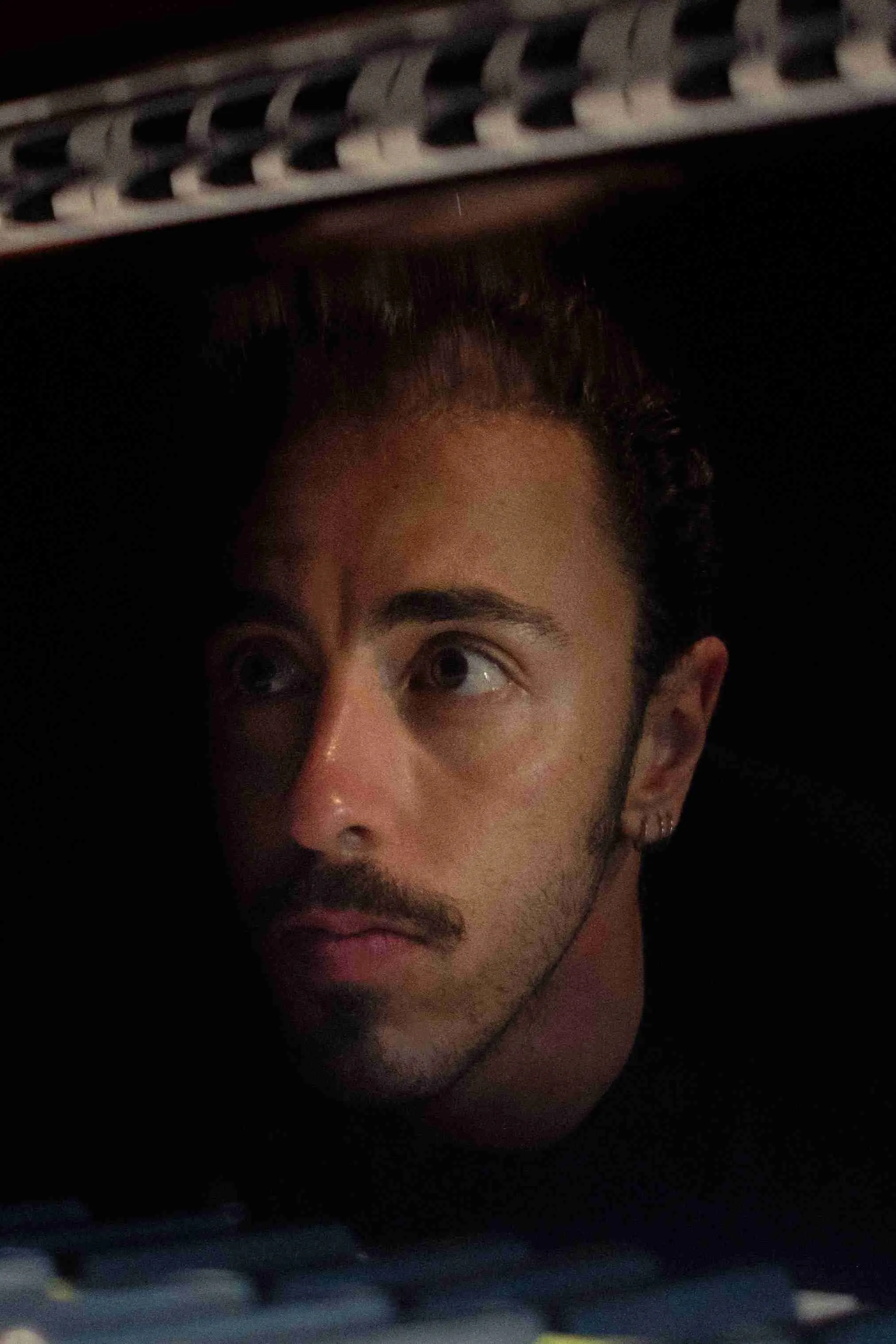
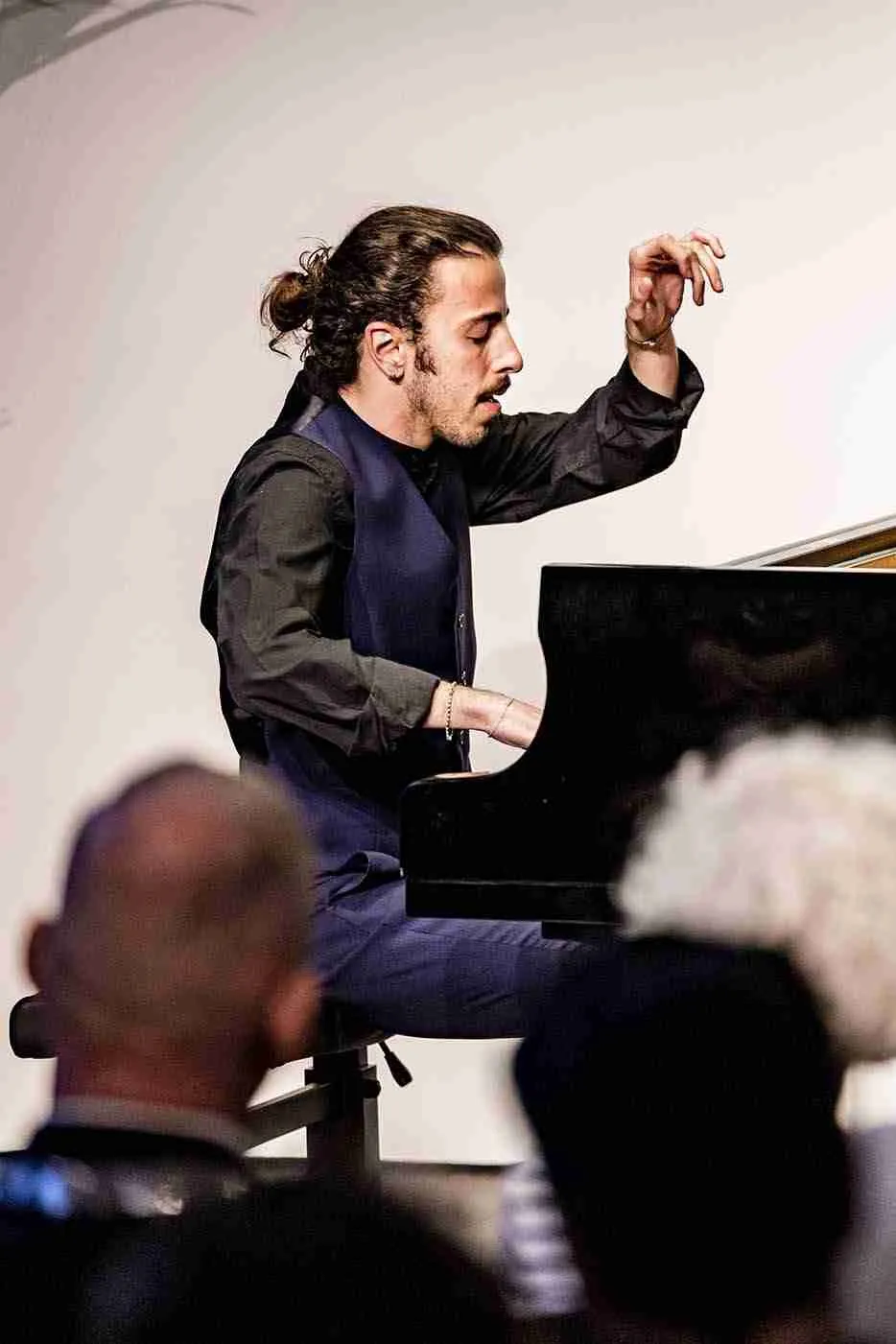
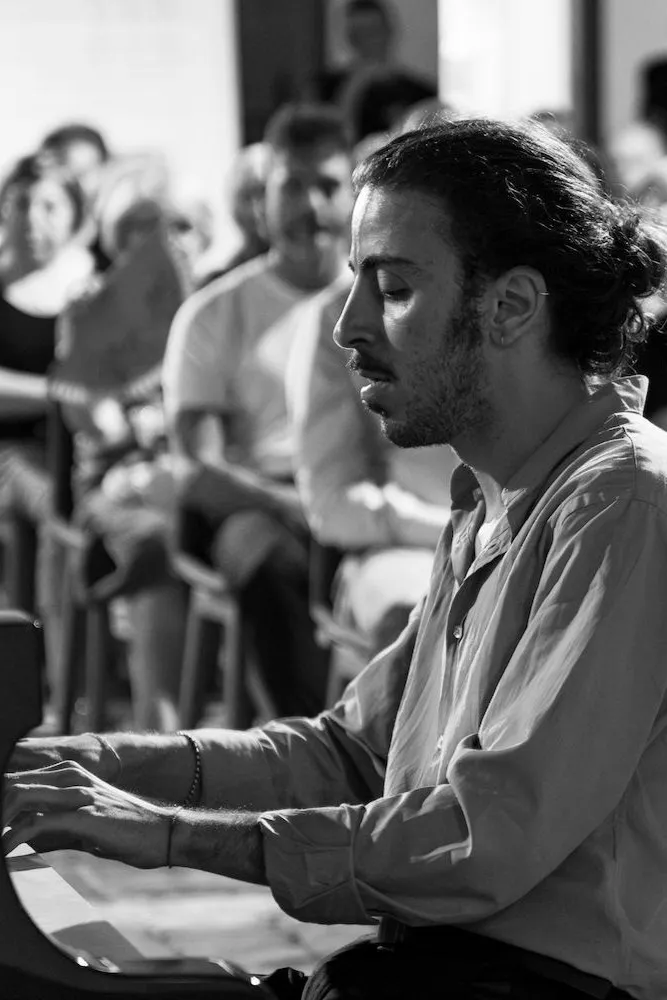
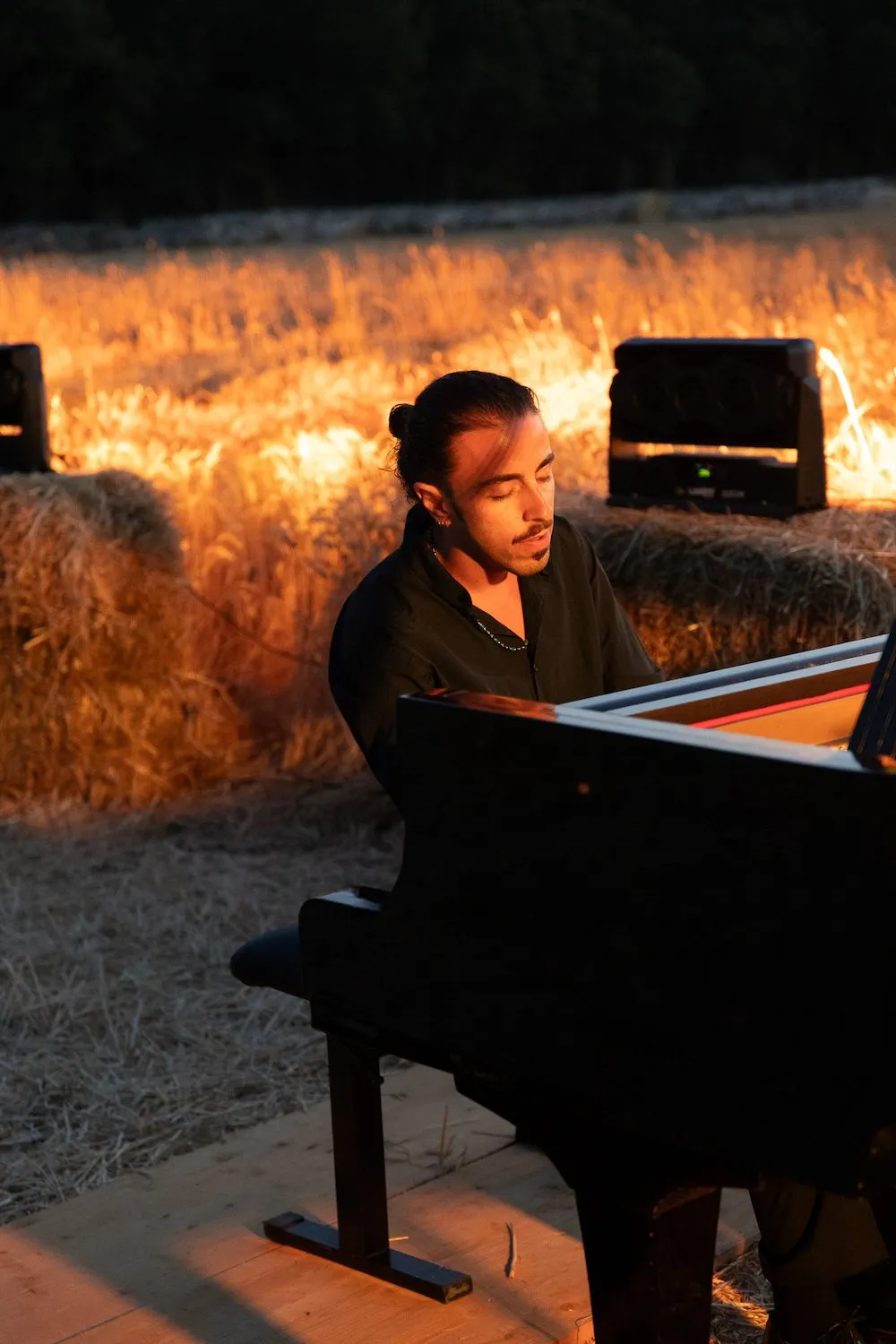
Romolo Ludovico Lanza is an Italian pianist based in Oslo, active internationally as both a soloist and chamber musician.
Born in Taranto, Southern Italy, he began studying piano at an early age with his father, pianist and composer Cosimo Damiano Lanza. He later entered the Conservatorio “Arrigo Boito” in Parma, where he studied principally with Alberto Miodini, alongside Mariangela Vacatello, while developing an extensive chamber-music practice with Pierpaolo Maurizzi. He graduated with the highest marks. His years in Parma — and in particular his work with Miodini and the Trio di Parma — became a formative influence on his approach to both solo and chamber repertoire.
He continued his studies at the Hochschule für Musik und Darstellende Kunst Frankfurt, where he worked with Oliver Kern with the support of a scholarship, before moving to Norway to study with Christopher Park at the Norwegian Academy of Music in Oslo, where he completed a Master’s degree in Performance. During his development he has also worked with musicians including Andrea Lucchesini, Marianna Shirinyan, Filippo Gamba, Alexander Ullman, Riccardo Risaliti, Roberto Cappello and Giampaolo Nuti.
Solo performance and chamber music occupy an equally important place in his artistic life. Among his regular collaborators is pianist Sigmund Skjeldrum Toppe, with whom he has developed several projects between Norway and Italy, including a concert tour selected by the Norwegian Academy of Music and a recital at the Italian Cultural Institute in Oslo. He has also collaborated with musicians including Henninge Landaas, Andrea Scaffardi, Joanna Hanhikoski and Frøydis Fegran Kopperud, among others.
His concert activity has taken him to venues including Harpa in Reykjavík, Lindemansalen in Oslo, Troldsalen at Troldhaugen, Sala Verdi in Parma, Bij Andreas in Naarden, Forstanderskapssalen at Sentralen, Kulturhuset Banken in Lillehammer and Vytautas Magnus University in Kaunas. His festival appearances include the Festival Pontino, Naarden International Piano Festival, Magnus Piano Week, Pordenone Piano City, Lecce Piano City and Piano Lab, alongside other projects across Europe.
In August 2026, Lanza was invited by KODE as Pianist of the Week at Troldhaugen, Edvard Grieg’s home in Bergen, performing daily in Troldsalen from 25 to 30 August. He was the only Italian pianist included in the 2026 Pianists of the Week programme.
In the same year, he performed a quartet concert for Dextra Musica at Blaafarveværket, further developing a chamber-music activity closely connected with the Norwegian musical scene.
His repertoire spans different periods, with Johannes Brahms occupying a particularly important place in his artistic research, alongside a strong engagement with twentieth- and twenty-first-century music. His interest in literature, visual art and dance also influences his approach to repertoire, often leading him to build programmes around broader artistic ideas and connections between music, place, memory and identity.
A particular strand of this work has been his engagement with twentieth-century Italian repertoire. In June 2025 he gave the first documented Norwegian performance of Mario Castelnuovo-Tedesco’s Cipressi, Op. 17, at Lindemansalen in Oslo, as part of his final Master recital, With Heart and Brain. The following evening he performed again in Oslo for the Italian Republic Day celebrations organised by Comites Oslo.
His relationship with Italian cultural institutions in Norway has developed over several years. In January 2025 he appeared in recital at the Italian Cultural Institute in Oslo with Sigmund Skjeldrum Toppe; his collaboration with both the Institute and Comites Oslo later continued through the Mediterraneo Chamber Music Festival, including its 2026 presentation at Sentralen in Oslo. His activities have also included projects connected with the Embassy of Italy and the Embassy of Spain in Norway.
Over the past two years, his artistic development has been supported through career grants from the Tom Wilhelmsen Foundation. Earlier in his career, he also received recognition in several national and international piano competitions, including PIOP, the Stravinsky Competition, the Città di Palmanova Competition and ICM Paris.
Alongside his performing career, Lanza has developed a strong interest in artistic direction and in creating new contexts for musicians and audiences. Between 2019 and 2021 he created Les Concerts du Cloître at the Conservatory of Parma, later developing the masterclass and concert series Vie Nuove.
He is the Founder and Artistic Director of the Mediterraneo Chamber Music Festival & Academy, established in Southern Italy as a meeting point between established performers, young musicians and international institutions, with a particular emphasis on building cultural connections between the Mediterranean and Northern Europe.
In May 2026, he served as Executive Director of the Dinu Lipatti International Music Competition for Youth at Villa d’Este in Tivoli (Rome), also contributing to the production of the competition.
Lanza is also active as a teacher in Oslo. He has worked with the Talent Development Programme (TUP) at the Norwegian Academy of Music and currently teaches for OIPS, working with students of different ages and levels.
 omolo Ludovico Lanza